It’s 11:45 a.m. on Monday morning. You’ve already attended three meetings today, and your to-do list hasn’t been attended to.
You’ve been talking, listening, nodding, and updating, but when you glance at your actual tasks, they’re untouched. The real work is waiting for the “real time” that never seems to come.
Sound familiar?
We’re living in the age of overcommunication, where every team, project, and initiative seems to demand constant updates, check-ins, and alignment meetings. At face value, all this chatter might feel productive, but in reality, it’s killing focus, draining time, and quietly sabotaging the very output we’re trying to improve.
Take a look at this paradox: communication is essential for collaboration, yet too much of it causes dysfunction.
When a company is scaling, going remote, or managing cross-functional projects, the default instinct is to ramp up communication. More syncs. More daily stand-ups. More “quick check-ins” that are never quick.
The logic is simple: if we keep talking, we’ll stay aligned.
But here’s what really happens: we confuse visibility with effectiveness. We mistake busyness for progress. We talk so much about the work that we leave no room to actually do the work.
A study by Atlassian found that the average employee attends 62 meetings a month, and half of those are considered a waste of time. That’s 31 hours per month, nearly a full workweek gone to meetings that provide little value.
So while we may feel plugged in and responsive, what we’re often doing is performing productivity, not living it.
The Real Cost of Too Many Meetings
Meetings don’t just eat time; they fragment our attention. They interrupt flow. They replace creative problem-solving with passive participation, drain creative energy, and quietly rob teams of momentum. It’s not just about the hours lost, but what those hours could have been: deep focus, original thinking, and tangible progress.
Modern work thrives on autonomy, flow, and meaningful contribution. But when meetings dominate the workday, those very foundations get chipped away.
Let’s unpack the hidden—and not-so-hidden—costs of overmeeting:
Time Drain
Starting with the most obvious but overlooked reality: time is finite.
At first glance, a 30-minute meeting seems harmless. Quick. Efficient. Necessary. But let’s zoom out. That 30-minute meeting isn’t just 30 minutes.
It’s:
- The 10 minutes you spend preparing, reviewing the agenda, and rehearsing updates.
- The 5–15 minute transition time where you mentally shift gears from your last task.
- The 20-minute post-meeting recovery where you try to remember what you were even doing before it started.
That half-hour meeting just consumed nearly an hour of productive capacity. And when you have 3-4 meetings scattered across your day, you’re not just losing chunks of time; you’re never fully getting into your work in the first place.
The tragedy? Most of these meetings are not critical. They’re habitual. Scheduled once and never questioned. Every unnecessary meeting chips away at your actual job. You spend the day juggling calendars instead of delivering results.
Context Switching
Your brain doesn’t just hop from one topic to another like tabs in a browser. Every time you switch contexts from planning marketing strategy to reviewing design feedback to jumping into a budget discussion, it takes energy to recalibrate. That energy is limited.
Too many meetings mean too many shifts, and the more you context-switch, the more productivity suffers. Research by the American Psychological Association (APA) found that task-switching can reduce productivity by up to 40%.
Meeting Fatigue
If you’ve ever felt more tired after a day of back-to-back Zoom calls than after a full day of execution work, you’re not imagining it. Virtual meetings demand sustained attention, managing facial expressions, and visual processing. It’s mentally draining. You’re constantly “on”. Even in meetings where you don’t speak much, the anticipation of being called on or needing to contribute keeps your mind on edge.
People call it “Zoom fatigue”, but it’s really overcommunication fatigue. And it affects morale, especially in remote teams.
Delayed Decision-Making
The irony that stings the most: all these meetings, these endless attempts to collaborate better, often slow things down instead of speeding them up.
When every decision has to be discussed, debated, and documented across multiple time zones and Slack threads, progress grinds to a halt. It’s what organisational psychologists call alignment theatre.
Everyone shows up. Everyone agrees, but nothing actually moves forward.
The reasons?
- Fear of ownership: When too many voices are involved, no one wants to be the one to make the call.
- Overdemocratisation: While inclusion is important, not every decision requires full consensus.
- Approval loops: Waiting on stakeholder sign-offs becomes a bottleneck.
Instead of executing, teams fall into cycles of discussion. Instead of trust, there’s redundancy. Instead of progress, there’s a pile-up of “next steps” that never get traction.
It’s a silent killer of momentum. and it often demoralises high performers who crave autonomy and results, because they start to feel like their time is being traded for optics.
Overcommunication Doesn’t Equal Clarity.
More communication doesn’t automatically mean better communication.
Reiterating the same message in different formats – email, Slack, Monday.com, and verbal updates – doesn’t necessarily make things clearer. Often, it just clutters the signal.
In the name of transparency, leaders may over-explain, over-schedule, and over-involve. But without structure and intention, this backfires. The result? People stop listening. Messages get diluted, and what was meant to foster clarity ends up breeding confusion and disengagement.
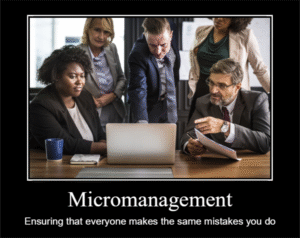
Let’s also talk about trust: when leaders demand constant updates and frequent syncs, it can come across as micromanagement, not support. It sends the message: “I don’t trust you to move forward without my oversight.”
Overcommunication isn’t collaboration; it’s control disguised as concern.
Signs Your Team Is Drowning in Meetings
If you’re wondering whether your team is experiencing the hidden effects of overcommunication, look for these common symptoms:
- “This could’ve been an email.” A classic sign of a low-value meeting.
- Lack of a clear agenda. Meetings without purpose waste time and lower engagement.
- Multitasking during calls. If people are checking email during the meeting, they’re not engaged and probably don’t need to be there.
- No action items. Meetings that end without next steps are essentially glorified conversations.
- Back-to-back bookings. If employees have no buffer time between meetings, it’s a red flag.
- Catch-up blocks. When people block time after work hours just to complete core tasks, it means meetings are cannibalising productivity.
Recognising these signs is the first step to reclaiming control.
What to Do Instead
Killing all meetings isn’t the answer. But making them intentional and rare is. Here’s how to keep communication clear without clogging calendars:
1. Audit Your Meetings Regularly
Every month or quarter, review your recurring meetings. Ask:
- Is this still necessary?
- Can this be reduced to 15 minutes or done asynchronously?
- Who really needs to be here?
If the answer isn’t a strong yes, cancel it.
2. Establish a Meeting-Free Day
Protect one day a week (e.g., Wednesday) where no meetings are scheduled. This creates a sacred space for deep work, ideation, and uninterrupted focus.
It’s a surprisingly powerful cultural shift and sends a signal that time to think is as important as time to talk.
3. Embrace Asynchronous Communication
Not every update needs to happen in real-time. Use tools like:
- Loom for quick video updates
- Notion or Confluence for documentation
- Slack threads for asynchronous discussions
Async gives people space to respond thoughtfully, not react impulsively. It also accommodates different time zones, working styles, and energy levels.
4. Create Clear Communication Protocols
Set expectations about when to use each channel:
- Slack: for quick, non-urgent updates
- Email: for formal communication and longer context
- Meetings: for high-stakes collaboration, decisions, or creative brainstorming
This reduces the noise and keeps everyone aligned on where to find information.
5. Make Meetings Count
If you must have a meeting, make it count:
- Share the agenda 24 hours ahead
- Keep it under 30 minutes
- Designate a facilitator and timekeeper
- End with clear action items and ownership
Meetings should be a last resort, not a default.
Productivity Loves Silence
Silence doesn’t mean disengagement. Fewer meetings don’t mean you’re disconnected. In fact, space and quiet are prerequisites for deep thinking, the kind that moves projects forward, sparks innovation, and actually drives results.
Some of the most high-performing companies are shifting toward deliberate communication, not constant communication. They prioritise signal over noise. They give people the room to think.
And that’s the future of productive work.
Talk Less, Do More
So let’s go back to that Monday morning.
You’re staring at a calendar jam-packed with meetings. But what if you took control? What if you cancelled one meeting, turned another into a Slack update, and carved out two solid hours for deep work?
What if your team normalised less communication but better communication?
The truth is: overcommunication isn’t just annoying; it’s a productivity killer. It’s time to rethink our obsession with alignment and embrace the power of trust, clarity, and intentional silence.
Your calendar is a reflection of your priorities. Make sure real work actually has a place in it.
Stay frosty.



You could certainly see your enthusiasm in the work you write. The world hopes for even more passionate writers like you who are not afraid to say how they believe. Always go after your heart.
🙏🙏🙏
Nice read. I enjoyed reading this. Good job on this article! It’s like you read my thoughts!
Glad you enjoyed it
It’s really hard to find good quality writing like yours these days. I truly appreciate this post. I truly appreciate this post. You’ve made my day! Thx again.
You’re welome
It’s like you read my thoughts! I truly appreciate this post. It’s like you wrote the book on it or something. Some nice points there. This is an excellent, an eye-opener for sure! I enjoyed your post.