Society has long carried a fixed image of disability, one that equates it with limitation, pity, and dependency. For decades, people living with disabilities were cast in narrow roles, expected to exist on the sidelines of life and work. In many climes, especially in the past, a disability was perceived as a career-ending circumstance, something that automatically shut the doors of opportunity. It was rarely imagined that someone in a wheelchair could run a multinational business, that a person born blind could lead innovation in technology, or that someone who is deaf could create world-class art.
And yet, that narrative has not only been challenged, it has been completely rewritten in many parts of the world. Across industries, people living with disabilities have risen, not just as participants in the workforce but as leaders, innovators, and icons. In some countries, legislation, technology, and cultural shifts have erased much of the old prejudice. It is not uncommon to see Fortune 500 companies deliberately hiring neurodiverse talent, sports leagues celebrating Paralympic champions as equals to Olympic athletes, or politicians with visible disabilities serving at the highest levels of government.
But of course, this evolution is uneven. In many societies, especially in parts of Africa, Asia, and Latin America, the old narrative still lingers. Accessibility is patchy, workplaces are ill-equipped, and bias quietly dictates hiring decisions. Too often, disabled professionals find themselves underestimated or excluded. The global landscape tells a mixed story: progress in some regions, persistent barriers in others.
Against this backdrop, the question is worth asking: can a disability become more than something to cope with? Can it, in fact, be turned into a career strength? The answer, drawn from history, modern examples, and the lived experience of thousands, is a resounding yes.
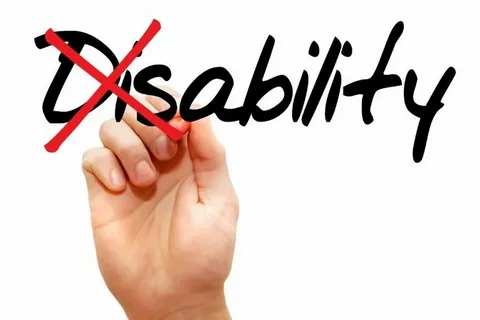
Dimensions of Career Success for People With Disabilities
To talk about turning disability into a strength, we must first consider what success in a career truly means. The truth is, success has always been a subjective concept. For some, it’s climbing the corporate ladder. For others, it’s running their own business, building influence, or simply finding meaningful work that aligns with their values.
For disabled professionals, success often carries additional dimensions. There’s the personal victory of breaking into spaces that once excluded them. There’s the deeper impact of serving as a role model, proving to younger generations that disability is not destiny. For many, career success is not just about salary or job title; it’s about reshaping how society views ability itself.
In this way, success for a disabled professional is layered. It includes the conventional milestones; promotions, recognition, and financial security but it also includes the more profound achievement of changing perceptions, normalising inclusivity, and leaving a legacy that is bigger than one’s job description. When a wheelchair-using entrepreneur builds a thriving business, when a deaf actor wins international awards, when a blind tech innovator designs life-changing software, this success is not just personal, it’s about changing the way people see what’s possible.
The Barriers and Realities
Of course, this conversation would be incomplete without acknowledging the very real barriers that persist. Many disabled professionals still walk into interviews where their abilities are doubted before they’ve spoken a word. Employers sometimes see the disability before the résumé.
Workplace accessibility remains inconsistent. Office buildings lack ramps or elevators. Digital platforms are not always screen-reader friendly. Recruitment systems often exclude neurodiverse candidates who don’t fit the conventional interview mould.
Then there is the silent weight of stigma. In some communities, disability is still misunderstood, sometimes even seen as a curse. That stigma can translate into discrimination in hiring, limited opportunities for advancement, or outright exclusion.
There’s also the personal toll of navigating a world not built for you. A professional with chronic pain may battle exhaustion that co-workers never notice. Someone with a hearing impairment may spend twice the energy trying to catch conversations in meetings. These realities don’t disappear simply because society has made progress.
And yet, it’s often within these struggles that extraordinary strength is built.
When Disability Becomes a Strength
Across industries, history and present-day stories show us that disability can forge qualities that fuel remarkable careers.
In technology, consider Srinivasa Ramanujan’s intellectual contributions despite illness, or more recently, Toby Ott, a blind programmer in the UK who writes code using screen-reading software and contributes to complex systems. Far from being held back, their conditions shaped problem-solving skills and sharpened focus in ways that propelled them forward.
In politics, Franklin D. Roosevelt governed the United States through the Great Depression and World War II while using a wheelchair due to polio. His disability never prevented him from being one of the most impactful leaders in history. More recently, in Africa, we see leaders like Senator Isiaka Adeleke of Nigeria, who campaigned for inclusion of people with disabilities in governance, and Jared O’Mara in the UK Parliament, who openly represented himself as a disabled politician.
In entrepreneurship, countless examples abound. Take Richard Branson, founder of the Virgin Group, who has dyslexia. His condition forced him to think differently, and that unconventional approach became his entrepreneurial advantage. Or Haben Girma, the first deafblind graduate of Harvard Law School, who turned her lived experience into a successful career as a disability rights advocate and speaker.
In arts and entertainment, the world has been shaped by remarkable talents who happened to live with disabilities. Think of Stevie Wonder and Ray Charles, both blind, yet celebrated globally as musical icons. Or Marlee Matlin, the deaf actress who made history by winning an Academy Award. Closer to home, there is Cobhams Emmanuel Asuquo, Nigeria’s blind producer and songwriter, and Salif Keita, the Malian singer with albinism known as the “Golden Voice of Africa.” Their stories are not about “succeeding despite disability.” Rather, their artistry was shaped, deepened, and enriched by the unique ways they experience the world.
In sports, the Paralympics continues to prove that disability is not an obstacle to greatness. Athletes like Natalie du Toit, the South African swimmer who became the first amputee to qualify for the Olympics, challenged perceptions by competing against able-bodied athletes. Others like Tatyana McFadden, a wheelchair racer with multiple Paralympic golds, have redefined what athletic excellence looks like.
In entrepreneurship, countless examples abound. Take Richard Branson, founder of the Virgin Group, who has dyslexia. His condition forced him to think differently, and that unconventional approach became his entrepreneurial advantage. Or Haben Girma, the first deafblind graduate of Harvard Law School, who turned her lived experience into a successful career as a disability rights advocate and speaker.
These examples cut across fields but share a common thread: the disability itself did not erase potential. In fact, it often forced innovation, resilience, and creativity that became career-defining strengths.
The Role of Accessibility and Support
Turning disability into a strength is not simply a matter of personal willpower. It is also about the environment. Accessibility is the bridge between talent and opportunity.
In progressive societies, laws such as the Americans with Disabilities Act (ADA) in the US, or disability inclusion policies in the EU, have created frameworks that protect rights and require accommodations. This has enabled more disabled professionals to participate fully in the workforce. Technology has amplified this further, voice recognition software, screen readers, AI-powered tools, and remote work platforms have made entire career paths possible where they once seemed out of reach.
Support also comes from culture. Workplaces that go beyond compliance to embrace genuine inclusivity create environments where disabled employees can not only fit in but thrive. Mentorship programmes, disability employee networks, and inclusive leadership are not niceties; they are catalysts.
In societies where these supports are absent, progress is slower. But even there, grassroots advocacy and entrepreneurial innovation are opening new paths.
Positioning Disability as a Career Strength
So how can someone living with a disability consciously turn it into a career advantage? It begins with reframing the story. Instead of seeing disability only as a limitation, it can be seen as an experience that builds uncommon skills.
For example, resilience, the kind built by navigating daily challenges, translates into leadership under pressure. Creativity, born from finding alternative ways to solve problems, becomes innovation in the workplace. Empathy, sharpened through lived experience, makes for better managers, collaborators, and human-centered designers.
In practical terms, disabled professionals who embrace their stories often find power in them. At job interviews, rather than avoiding the subject, some frame it as evidence of adaptability and strength. In the workplace, they use their unique perspectives to spot gaps in processes or design solutions that others might miss. In entrepreneurship, they turn personal challenges into businesses that solve problems for millions.
Employers who recognise these strengths benefit as well. Diverse teams that include disabled professionals are proven to be more innovative and resilient. A company that hires people with disabilities doesn’t just “do the right thing,” it often gains a competitive edge.
…………………………….
The truth is, disability does not erase ambition, talent, or the human desire to achieve. If anything, it has a way of sharpening those qualities. To live in a world not built for you and still rise within it takes creativity, determination, and vision. These are superpowers.
Yes, barriers remain. Yes, there are societies and workplaces that still cling to outdated narratives. But the tide is shifting, and every success story pushes the world closer to a place where disability is not whispered about as a limitation but celebrated as another dimension of human strength.
So, can you turn a disability into a career strength? Absolutely. Not only can you, but history and the present are filled with people who already have. Every blind coder, every deaf artist, every wheelchair-using CEO is living proof. The question is no longer whether it is possible, it is how many more people will be given the chance to prove it.
If you’re reading this while living with a disability, know this, your story isn’t defined by limits. It’s a story of strength, resilience, and possibility. What others once thought would hold you down might be the very thing that lifts you up and pushes you forward.
Finally, if you don’t live with a disability, your role is just as important. Discrimination only cheats us all of the brilliance and creativity disabled people bring. Real progress is when inclusion stops being charity and simply becomes the way we live.
Stay frosty.