Gaslighting is one of those words that now flies around so casually, it’s almost lost its sting. These days, someone disagrees with you, and it’s “you’re gaslighting me.” Your friend forgets something you said; you term it gaslighting. Your partner doesn’t see your point; your response is “You’re gaslighting me again.” The term has become so popular that it’s often tossed into conversations without thought, sometimes even used incorrectly to make a point stick. But gaslighting is not just a buzzword or an online trend. It’s a deeply manipulative tactic that has existed for decades, long before social media turned it into a hashtag and long before psychologists began defining it as emotional abuse.
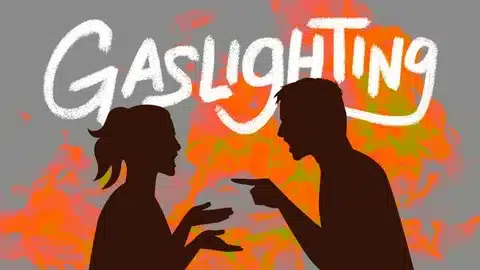
The word itself comes from a 1938 play, Gas Light, later adapted into films, where a husband subtly manipulates his wife into believing she’s going insane. He was dimming the gas lights in their home, then denying it when she noticed. The story captured something chillingly familiar: how reality can be twisted by someone you trust until you begin to question your own memory, perception, and even sanity. That’s what gaslighting truly is. A calculated attempt to make another person doubt themselves so the manipulator can maintain control, power, or an illusion of innocence.
While the term might have come from a movie, the act itself has always been part of human relationships: in subtle lies, selective memories, and emotional deflections that make others feel crazy for seeing what they see. Before it became a popular word, people were already living it: in marriages where one partner constantly invalidated the other’s feelings, in families where parents rewrote history to escape accountability, in workplaces where bosses denied what they said last week, and even in politics where leaders convinced citizens that what they saw and heard was not real. The only difference is, back then, we didn’t have a name for it.
The most sinister thing about gaslighting is how subtly it starts. It is not always loud or aggressive. Sometimes, it’s dressed in calmness and reason. It’s the friend who insists, “You’re overreacting,” when you call out their hurtful comment. It’s the partner who says, “You’re imagining things” when you confront them about a lie. It’s the parent who replies, “That never happened,” when you bring up something that scarred you as a child.
It’s the boss who tells you, “I never said that,” even though you remember the conversation vividly. Over time, the victim begins to internalise confusion: “Maybe I am overreacting… maybe I misheard… maybe I’m too sensitive.” And that’s exactly how the manipulator wins, not by shouting, but by making you question the certainty of your own voice.
In close relationships, gaslighting can feel like emotional suffocation. It’s the partner who invalidates your emotions every time you express discomfort, the one who flips every confrontation until you end up apologising for bringing it up. You begin to edit yourself, to minimise your feelings, because every time you try to express them, they’re dismissed as irrational or dramatic. Over time, love becomes a negotiation with your own perception; you trust them more than you trust yourself, and that’s when the manipulation is complete.
In families, it takes on a more subtle yet equally dangerous shape. Some parents rewrite the past to avoid guilt, denying neglect, pretending hurtful words were just jokes, and insisting that their children are ungrateful for remembering what they wish would stay buried. In such homes, emotional truth becomes a battlefield. The child grows up constantly doubting whether their pain is valid, often becoming an adult who struggles with self-trust and boundaries. Gaslighting in families doesn’t just distort relationships; it distorts identity.
Truthfully, it’s not always one-sided. Children, too, can gaslight their parents, sometimes consciously, other times as a learnt defence. A teenager might twist the truth to escape consequences, insist a parent “never said that” to dodge accountability, or downplay their actions to make the parent feel unreasonable or forgetful. In more complex dynamics, grown children may even rewrite family history to cast themselves as victims and their parents as villains, ignoring nuance or shared responsibility.
While some of these behaviours stem from immaturity or pain, the effect is the same: it manipulates reality and leaves the other person questioning their memory, their role, and their worth. Gaslighting in families, no matter who does it, is particularly painful because it strikes at the root of society, the place where truth should feel safest.
At work, it wears a professional smile. A manager who denies previous instructions and blames you for the outcome. A colleague who subtly twists stories to make you look unreliable. A superior who says, “You must have misunderstood me,” when they clearly changed the terms of a project. These small manipulations chip away at confidence, creating a pattern of second-guessing and fear, where people spend more time questioning their competence than doing their jobs.
How about when it happens on a national scale? Gaslighting becomes a political weapon. Leaders and governments have long used it to control narratives. “That didn’t happen.” “The media is lying.” “You’re remembering it wrong.” It’s how facts are rewritten, how blame is shifted, and how accountability is dodged.
Citizens begin to doubt their own eyes and their own reality, and once that happens, the truth becomes whatever those in power say it is. It’s not new; history is full of regimes that thrived on manipulating perception. Only now, the manipulation just happens in real time, on screens, in statements, and in strategic denial.
However, beyond being a manipulator’s tool, gaslighting also exposes something uncomfortable about us: that sometimes, we too have done it. Maybe not in a cruel, calculated way, but in those small, defensive moments when we didn’t want to be wrong. When someone called us out and, instead of owning it, we said, “That’s not what I meant,” when deep down we knew it was.
When a friend confronted us about something hurtful, and we replied, “You’re being too sensitive.” When we forgot an important detail and still insisted, “I never said that.” It’s uncomfortable to admit, but in our own attempts to protect our pride, some of us have tiptoed into gaslighting, turning the truth just slightly enough to escape accountability.
It’s easy to recognise gaslighting when someone does it to us. It’s harder when the mirror faces us, then we find ways to justify it. But intent doesn’t erase impact. Every time we twist someone’s perception to defend ourselves, we erode trust, and worse, we normalise a kind of dishonesty that makes relationships unsafe. Accountability is uncomfortable, but it’s the antidote to gaslighting.
The truth is, gaslighting thrives in places where honesty feels threatening. It survives in families that fear confrontation, relationships that can’t handle vulnerability, workplaces that punish dissent, and societies that worship control. To stop it, we have to value truth more than image and understanding more than ego. We have to start by saying, “I did say that,” or “You’re right, I hurt you,” or “I remember it differently, but I understand how that made you feel.” These are small phrases, but they carry the weight of integrity, the kind that disarms manipulation before it starts.
What makes gaslighting so destructive is not just the lie, but the erosion of trust it leaves behind. Once you have been gaslighted, you start to question everything: your emotions, your memory, even your sense of reality. Healing from it means slowly rebuilding that inner compass that someone tried to break. It’s learning to trust your feelings again, to believe your experiences even when someone else denies them.
Also, for those of us who may have ever gaslighted someone intentionally or not, doing better begins with awareness. It begins with understanding that being wrong doesn’t make us weak, and apologising doesn’t make us small. Manipulation often begins where accountability ends. The moment we learn to say, “You’re right, I was wrong,” we take away the need to twist reality.
Gaslighting may have become an overused word, but the act itself remains one of the most insidious forms of emotional control. It’s not about disagreement or misunderstanding; it’s about the deliberate distortion of truth to gain power. And while we can’t always control who gaslights us, we can choose not to be that person in someone else’s story, given that the world already has enough people trying to rewrite reality. Hence, what it needs is more people brave enough to own it.
Stay frosty.