Bad days are a universal human experience, yet when we are in the middle of one, it feels like we are the only person on the planet who cannot seem to get our act together. If you are reading this while sitting in your pyjamas at 2:00 PM or while hiding in a quiet corner of the office hoping no one asks you for a status update, please know that you are not alone.
First, let’s agree on something. Bad days are normal. Nobody is “on” all the time. We sometimes act like having a bad day means we are weak, unserious, ungrateful, or not cut out for success. That’s not true. You can be hard-working and still have a day where everything annoys you. You can be talented and still make a mistake that makes you want to disappear. You can be grateful for your job and still feel overwhelmed.
Bad days do not send invitations. They just show up. The question is not whether they will come. The real question is, what do you do when they do?
The first thing I want to tell you, friend to friend, is that it is perfectly okay to admit that today sucks. A bad day is not a bad life. It is just a bad day. The problem is not the day itself. The problem is what we tell ourselves about it. There is this weird pressure to stay positive all the time, which people often call “toxic positivity,” and it is honestly exhausting.
If you try to force a smile when you feel like crying, you are just putting more stress on yourself. Sometimes, the most productive thing you can do is acknowledge the situation. Tell yourself, “Right, today is a bit of a nightmare, and I feel rubbish.” There is a strange kind of power in just saying it out loud. It takes away some of the mystery and the fear. You aren’t failing at life; you are just having a human experience that happens to be unpleasant right now.
Once you have admitted that the day is a bit of a write-off, you need to give yourself permission to lower the bar. Yes, I said it. Some days are not for excellence. They are for survival.
We often have these massive to-do lists that would be ambitious even on our best days.
When you are having a bad day, trying to tick off twenty items is a recipe for a breakdown. Instead, try to find the absolute basics you need to do to keep things going. Maybe it is just answering that one urgent query from a recruiter or making sure you eat a proper meal. Everything else can wait. The world will not stop spinning if you don’t reorganise your filing system or finish that complex report today. By lowering the stakes, you give your brain a bit of breathing room to recover.
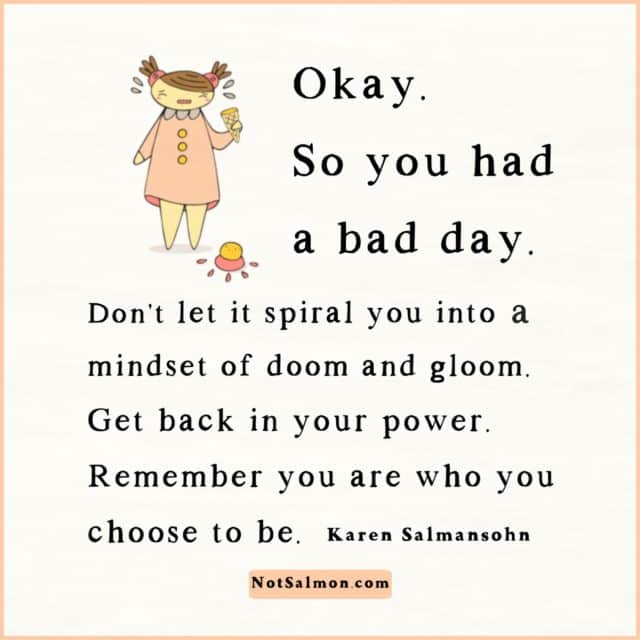
It is also worth looking at your physical surroundings. I am a firm believer that our environment has a massive impact on our internal state. If you have been sitting in the same chair for four hours staring at a screen that feels like it is mocking you, get up. You don’t have to go for a five-mile hike; just walk to the end of the street or stand in the garden for five minutes.
There is something about fresh air and a change of scenery that helps to reset the nervous system. If you are stuck in an office, even just going to the breakroom for a glass of water or taking the long way to the toilet can help. It breaks the loop of negative thoughts that tends to play on repeat when we are feeling low.
Whilst we are on the topic of physical things, let’s talk about food and water. It sounds incredibly basic, almost like advice you would give to a toddler, but you would be surprised how many bad days are actually just cases of being hungry or dehydrated. When we are stressed, we often forget to take care of our basic needs.
We survive on caffeine or adrenaline or both, which only makes us more jittery and anxious. If you are feeling overwhelmed, stop and ask yourself when you last had a proper glass of water or a meal that wasn’t a biscuit. Sometimes, a bit of protein and some hydration can clear the fog enough for you to see a way forward.
Another thing that helps me when I am spiralling is the five-year rule. Ask yourself: will this matter in five years? Will I even remember this specific bad day? Usually, the answer is a resounding no. Even if you messed up a presentation or got a harsh piece of feedback, in the grand scheme of your career and your life, it is just a tiny blip.
We tend to magnify our problems when they are happening right now, making them look like giant monsters, but perspective is the best way to shrink them back down to size. It is just a day. It is twenty-four hours, and a good chunk of that is spent sleeping anyway. You only have to get through the next few hours, and then you can try again tomorrow.
Speaking of tomorrow, one of the best ways to handle a bad day is to decide when to call it quits. There comes a point in every bad day where you are no longer being productive; you are just vibrating with frustration. If it is 4:00 PM and you have spent the last hour staring at the same sentence, it might be time to admit defeat for the day.
If you can, log off. Go home, or if you are already home, move away from your workspace. Have a long shower, put on some clean pyjamas, and watch something mindlessly entertaining. Treat the evening as a recovery period. You wouldn’t try to run a marathon on a broken leg, so don’t try to be a productivity machine when your mental health is flagging.
If you are a job seeker, bad days can feel even more intense. The process of looking for work is inherently vulnerable. You are putting yourself out there, over and over again, and often getting nothing back but silence or automated rejections. On those days, it is easy to let the bad day turn into a bad life narrative. You start thinking that you will never find a job, that you aren’t good enough, or that everyone else is more successful than you. Please, don’t let the silence of a recruiter define your worth.
The job market is a bit of a lottery sometimes, and a rejection is not a reflection of your value as a person. It is just a ‘no’ for that specific role at this specific time. On the days when the rejections hit hard, step away from the job boards. Do something that makes you feel competent, whether that is cooking a nice meal, playing a game, or helping a friend with something. You need to remind yourself that you have skills and value outside of a CV.
It also helps to talk to someone, but choose your person wisely. You don’t want the friend who is going to give you a lecture on hustle culture or tell you to just stay positive. You want the friend who will listen to you complain for ten minutes and then say, ‘Yeah, that sounds really tough. I’m sorry’. Sometimes, just being heard is enough to break the spell of a bad day. We are social creatures, and carrying the weight of a miserable day by ourselves makes it feel much heavier than it actually is. Sharing the burden makes it manageable.
Finally, remember that resilience is not about never having a bad day. Resilience is about what you do when you have one. It is about being kind to yourself when things go wrong instead of joining in on the bullying that your inner critic is already doing. You are doing your best, and some days, your best is simply surviving until bedtime. That is more than enough. You don’t have to be a hero every single day of the week.
As you head into the evening, try to do one small thing that makes you feel like you again. Listen to your favourite song, read a chapter of a book, or just sit in silence for a moment. Tomorrow is a brand-new start, a fresh page. You have survived every single bad day you have ever had so far, and your track record for getting through them is 100 percent. You are going to be just fine.
Stay frosty.