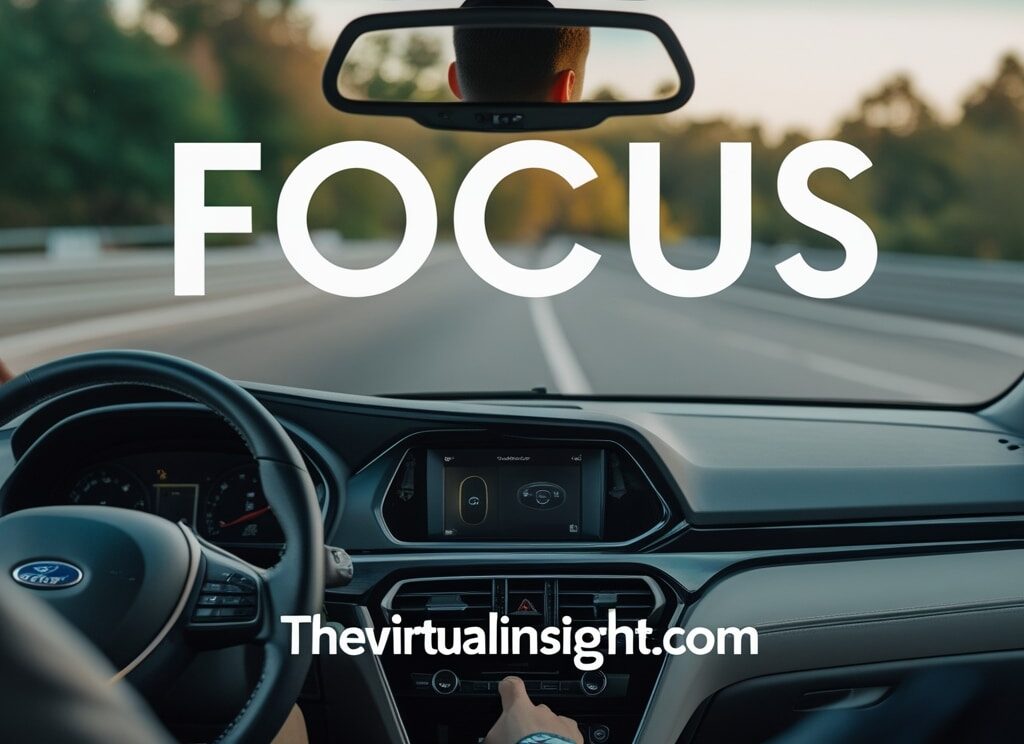
When you sit behind the wheel of a car, one thing is impossible to ignore. The windshield dominates your view. It stretches wide across your line of sight, giving you a broad, almost cinematic perspective of the road ahead. In contrast, you have that little rectangular rearview mirror reflecting what is behind you. It is a small fraction of the size of the windshield.
Engineers who designed the earliest car models were thinking about safety, angles, visibility, and mechanics. Philosophy was likely not on their drafting table. Still, the proportions tell a story. The design makes a quiet argument about priority. You need awareness of what is behind you, but your survival depends on what is in front of you. The mirror is there for reference. The windshield is there for direction. Without announcing it, the car teaches a principle: reflection has its place, yet forward focus carries the journey. It feels like a metaphor hiding in plain sight, a built-in reminder that progress requires the right focus.
You may attempt to navigate your present while emotionally parked in your past. You replay conversations that ended badly. You revisit opportunities you missed. You analyse decisions you would reverse if given another chance. Your mind becomes a cinema for old scenes, and you sit in the front row as if the ending might somehow change.
Reflection has value. It sharpens your awareness and reveals your patterns. It exposes your blind spots. You cannot grow without looking back at some point. Experience is one of the few teachers that does not require a classroom. The issue is not the mirror. The issue is the length of your gaze. There is a difference between consulting your past and dwelling there.
Focusing too much on the reflection behind you is a guaranteed way to drift out of your lane or, even worse, collide with something right in front of you. It is a strange human habit to prioritise the certainty of the past over the potential of the future. Even if the past was painful, it is familiar, and your brain tends to crave familiarity like a security blanket.
Fear often disguises itself as wisdom. It sounds responsible and feels cautious. Yet there is a thin line between learning from a mistake and allowing that mistake to define your identity. Once you cross that line, you are no longer driving with perspective. You are driving with baggage.
Someone who once failed at a business idea may hesitate to start another. Someone who was hurt in a relationship may struggle to open up again. Someone who experienced public embarrassment may avoid stepping into visible spaces altogether. The rearview mirror is still small, yet emotionally it becomes enormous.
Then there is the other side of the rearview mirror. It does not only hold regret. It also holds glory. You may live anchored to your best season. You may constantly measure your present against a peak moment that may never return in the same form. In that case, the past is not painful. It is comforting. It becomes a benchmark that makes everything current feel inadequate. Whether it is regret or nostalgia, the effect is similar. Movement slows.
The windshield represents something different. It represents your direction. It represents your possibility. It represents your acceptance that life unfolds forward, not backward. When you are driving, your eyes naturally rest on the horizon. The road ahead requires your full attention because it is dynamic and ever-changing. You anticipate curves. You adjust to traffic, and sometimes you need to pivot to avoid a hazard. None of those things can be managed effectively if your eyes are glued to what is receding in the distance.
Forward focus fuels your initiative. When your attention is on what you can build, you begin to ask better questions. What skills do you need to develop? Who do you need to connect with? What habits should you refine? Those questions create movement. They shift you from rumination to construction.
Of course, redirecting your focus is not always simple. Certain memories carry emotional weight. They do not fade just because you decide to look ahead. Healing sometimes requires you to sit with discomfort long enough to understand it. That is part of the glance in the mirror. You look back long enough to make sense of what happened. You acknowledge the hurt and identify the lesson. Then you turn your attention forward again.
Setting your sights on the windshield requires trust in your ability to navigate. If you are always looking back, it suggests a lack of confidence. Real confidence comes from looking at the road, gripping the wheel, and deciding that you can handle whatever curve appears next. Each small risk you take strengthens it. Each lesson you apply reinforces it. This shift in focus changes your internal chemistry.
Let’s consider the emotional weight of carrying the past into your current lane. When you dwell on old versions of yourself, you often hold yourself hostage to standards or failures that are no longer relevant. You are not the same person who missed that opportunity five years ago. You have more experience now, more wisdom, and likely a better set of skills for the terrain. Continually checking the mirror to see that old version makes it nearly impossible for you to live fully.
There is a kind of freedom that comes from deciding the mirror is no longer your primary view. It feels like a weight being lifted from your shoulders. Suddenly, the road feels wider. The colours of the sky seem more vibrant because you are actually looking at them instead of their reflection. This is the space where innovation and joy live. You cannot create something new while you are busy mourning something old. By intentionally choosing the windshield, you are giving yourself permission to be surprised by life again.
As we wrap up this conversation, you should take a moment to evaluate yourself. Are you squinting at that tiny mirror, trying to make sense of things that are already miles behind you? Or are you looking through the wide, expansive windshield at the possibilities that are waiting just around the bend? Life is far too short for you to spend it looking at where you have been. The most beautiful vistas are rarely found in the reflection. They are found by keeping your eyes on the road and your hands on the wheel.
Stay frosty.