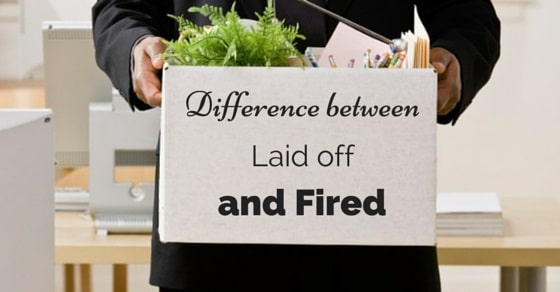
‘Laid off’ and ‘fired’ are two terms HR would have you believe are very different, even when the reality they produce is exactly the same. One sounds softer, almost considerate. The other lands harder, sharper, and carries more stigma. Yet stripped of tone, branding, and internal memos, they both point to the same outcome: you no longer have a job.
At its most basic level, being laid off means your employer no longer requires your role. Being fired means your employer no longer requires you in that role. That distinction looks important on paper, but it collapses quickly when you step into the shoes of the person on the receiving end. Bills still arrive. Identity still takes a hit. Plans still need to be rewritten. The logic is simple. Employment has ended.
Where things get complicated is not in the definition but in the emotional framing. Being laid off is often translated as, “You are good, but we do not need you anymore.” Being fired tends to sound like, “This is your fault. Your incompetence led to this.” Even when neither interpretation is entirely accurate, they shape how people walk away from the same door.
Companies are aware of this psychological gap, which is why language becomes such a strategic tool. Very few organisations enjoy saying they fired someone. The word feels heavy, confrontational, and final. So alternatives are invented, such as role elimination, position redundancy, organisational restructuring, and strategic realignment. The intention is clear: to soften the blow, reduce emotional fallout, and avoid the appearance of personal judgement.
The irony is that no amount of rebranding changes the lived reality. Whether someone is told their role has been eliminated or their performance no longer meets expectations, the next morning looks the same. No log-in. No meetings. No salary. The emotional impact might be delayed or redirected, but the situation itself remains untouched.
This is where the conversation usually becomes dishonest. People start ranking job loss as if one version is more respectable than the other. Laid off is framed as unlucky. Being fired is framed as shameful. One earns sympathy. The other invites speculations. That hierarchy does more harm than good, especially to the people trying to rebuild.
The truth is that both experiences destabilise, but in different ways. Being laid off can feel impersonal. There is often a strange mix of reassurance and rejection. You are told you did nothing wrong, yet you are still being let go. That contradiction can leave someone suspended between relief and grief. Relief that their competence was not questioned. Grief that effort and loyalty still did not guarantee safety.
Being fired tends to be more direct, even when the explanation is vague. There is a sense of finality that comes with it. The relationship has ended decisively. That can sting deeply, especially when the decision comes as a shock. Shock often gives way to embarrassment, then self-doubt. People replay conversations, projects, and emails, trying to locate the exact moment everything went wrong.
What rarely gets acknowledged is that surprise plays a major role in how either outcome is processed. Someone who saw the signs coming, maybe through dwindling work, tense feedback, or repeated restructuring rumours, often copes better than someone who felt secure the day before. Sudden job loss shakes more than income. It shakes trust in judgement and perception.
Some people internalise the news immediately. Their mind jumps to conclusions before facts have time to settle. They assume others are judging them. They question their value beyond the workplace. This can happen whether the exit was labelled a layoff or a dismissal. The label does not protect against the spiral. Mindset does.
Other people manage to hold the event at arm’s length. They see it as a transaction that has ended rather than a verdict on their worth. That distance allows them to recover faster, not because the experience was easier, but because they did not let it rewrite their entire story.
This is where the idea of fault becomes tricky. Laid off often equals not your fault. Fired often equals your fault. That is the popular narrative, but reality is often not as straightforward.
People are dismissed for reasons that have little to do with incompetence. Office politics, shifting priorities, mismatched expectations, poor management, and unrealistic targets all play a role. At the same time, layoffs are not always neutral events. Decisions about who stays and who goes are rarely as objective as organisations claim.
The emotional difference between the two outcomes often lies in clarity. Being fired, for all its discomfort, usually comes with a clear message. You are no longer needed here. The door is closed. That clarity can be brutal, but it also provides direction. There is no waiting period. No false hope of being called back. The path forward, however uncertain, is at least visible.
Being laid off can leave someone stuck in limbo. The absence of blame does not always bring peace. There is often an unspoken question hanging in the air. What if things change? What if funding returns? What if this was temporary? That uncertainty can delay action. Job searching feels premature. Emotional closure feels inappropriate. People end up waiting for stability to return instead of building a new one.
This waiting can stretch into months. Confidence erodes not because of failure, but because of inertia. The world moves on while the person stands still, unsure whether moving forward means letting go of something that might still come back.
This is why it is misleading to claim that being laid off is always easier than being fired. Easier on the ego, perhaps. Easier on the story you tell others. Harder when it comes to decisiveness.
Many people rebuild faster after being fired precisely because it forces reflection. There is no buffer zone. The discomfort demands engagement. Questions get asked sooner: what worked, what did not, and what needs to change. That process is uncomfortable, but it is also active.
Many people stay stuck after layoffs because the absence of personal accountability creates emotional fog. Without a clear reason, it is harder to know what to fix or whether anything needs fixing at all. Hope becomes paralysing instead of motivating.
Neither outcome determines capability. Neither defines employability. Neither cancels potential. These truths sound obvious when written down, yet they are difficult to believe when self-esteem is bruised. Work has a way of tying identity to output, and separation from it can feel like a loss of self rather than a change in circumstance.
What makes the difference is not the term used, but how the individual receives and processes the news. Two people can experience the same exit and walk away with entirely different futures. One collapses inward. The other recalibrates. One clings to what was lost. The other interrogates what was learnt.
Career recovery is rarely about the exit itself. It is about honesty. Honest reflection without self-punishment. Honest assessment without denial. Honest movement forward without waiting for permission from the past.
This is not a call to pretend job loss does not hurt. It does. It disrupts routines, finances, confidence, and plans. The first reaction is often shock, followed by embarrassment, then a sense of being adrift. Those responses are human. They are not signs of weakness.
What matters is what happens after that initial wave. Some people allow the label to define the experience. Being fired becomes a personal failure. Laid off becomes a permanent pause. Others refuse to let language do that much work. They recognise the situation for what it is: an ending that requires a response, not self-erasure.
The workplace will continue to invent softer phrases for hard decisions. That is unlikely to change. What can change is how much power those phrases are given. At the end of the day, laid off and fired both arrive at the same point. Unemployment. Transition. Uncertainty.
The real difference shows up later, in how quickly someone reclaims control, how honestly they reflect, and how willing they are to move forward without waiting for the story to sound nicer.
Stay frosty.