Some people leave their footprints softly, while the world expects a stomp. N’Golo Kanté is one of those people. In a sport where egos often take up more space than the ball, he has managed to remain unbothered, untouched, and quietly extraordinary. His story is not one of loud celebrations or extravagant lifestyles; it’s one of persistence, simple joys, and a kind of humility that feels almost out of place in modern football.
Kanté doesn’t look like the football superstar that his career résumé suggests. World Cup winner. Premier League champion. Champions League winner. Player of the Year. These are titles that would normally turn anyone into a brand. Yet, the man himself could walk through a busy street unnoticed, dressed in a simple polo shirt and jeans, carrying a calm smile that never seems to fade.
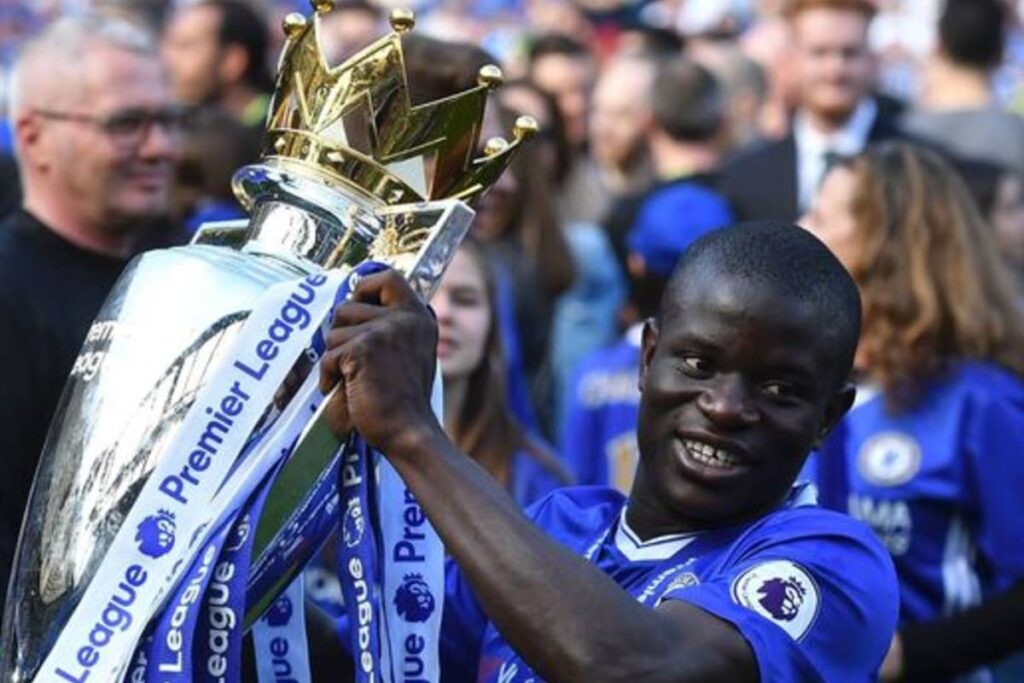
There’s something profoundly human about him. Maybe it’s his smiles, gentle, almost shy, or the way he runs like someone who still can’t believe he gets paid to do what he loves. Watching Kanté play feels like watching discipline dressed in grace. He doesn’t just chase the ball; he chases purpose, as if every blade of grass carries a piece of destiny waiting to be claimed.
His humility has never felt rehearsed. Born in Paris to Malian parents, Kanté grew up in a modest home, one of many children. He picked scrap metal from the streets as a child to help his family make ends meet. It’s not the glamorous beginning people like to hear about their idols, but it’s the kind of foundation that shapes a person’s view of success. When you have worked for every inch, you don’t take anything for granted.
It’s why, even after becoming a millionaire, he’s still the same person who prefers to drive himself to training in a small car (once famously a Mini Cooper that he bought when he first arrived at Leicester City). While his teammates upgraded to luxury vehicles and custom designs, Kanté’s car remained the same, slightly dented and old-fashioned, until he eventually replaced it with another modest choice.
When journalists asked about it, he simply said the car was working fine, so there was no reason to change it. It was not a public relations move. It’s a mindset. In an age where athletes are treated like royalty, Kanté has chosen to live like the boy he once was: simple, polite, and content.
His teammates often share small stories that reveal the kind of person he is off the pitch. Like the time he accepted a dinner invitation from a fan after missing his train and ended up spending the evening playing FIFA at the fan’s house. Or when he walked into the Chelsea canteen for the first time, greeted everyone individually, and offered to help carry trays for the kitchen staff. These moments don’t make headlines, yet they are what define him.
Perhaps what stands out most about Kanté is how unaffected he seems by the world’s obsession with recognition. While others chase endorsements, Instagram followers, and public validation, he seems to exist in a different rhythm, one where peace is more valuable than popularity. You can tell from his interviews; there’s always a trace of shyness in his voice, like he’d rather be anywhere else but in front of a camera. Even when praised, he finds a way to deflect the attention, often saying things like, “It was a team effort”, or “I just did my job”.
He is often seen tidying up after matches, picking up litter or shifting cones during training, not for attention, but out of habit. Respect seems woven into his nature; whether it’s a locker room, a stadium, or a mosque, he leaves every space better than he found it. Those around him say he greets everyone the same way, from cleaners to coaches, always with a handshake and always with a smile. He’ll help carry bags, thank the bus driver, or stop for photos with fans without the slightest hint of pretence. That’s Kanté: kindness practised as effortlessly as football itself.
After France won the 2018 World Cup, reports said Kanté was too shy to ask for the trophy. His teammate, Steven Nzonzi, noticed and handed it to him. The image of Kanté holding the cup with a small, uncertain smile became one of football’s most beloved moments. It wasn’t triumph plastered on his face; it was humility and disbelief, like he was still processing how far he’d come from those Paris streets.
Even when Chelsea won the Champions League, he was the quietest person in the room. While others danced and shouted, Kanté stood at the edge of the celebration, smiling softly, his joy understated but deeply felt. That’s who he is, someone who doesn’t need noise to feel happy.
He’s not unaware of his fame; he just refuses to be consumed by it. While others build empires and chase endorsements, Kanté treats football like a calling rather than a platform. His game has always been about service – doing the invisible work that makes others shine. Away from the pitch, Kanté’s life remains refreshingly ordinary. He’s invested in community projects, including a small football club in France that he quietly bought to help young players chase their dreams. There’s no PR campaign attached, no headlines screaming his generosity, just action. It’s easy to forget that in an industry where generosity is often performed for clicks, Kanté’s kindness feels personal.
When he moved to Saudi Arabia, critics saw another superstar chasing wealth, but with Kanté, it never felt that way. He arrived without drama, spoke little, trained hard, and played as though nothing had changed. The simplicity of his choices almost feels rebellious in today’s football culture.
Kanté’s story resonates because it goes against the grain of what success is supposed to look like today. We live in an age where visibility often replaces value, where being loud can sometimes feel more important than being good. Yet, here’s a man who proves that quiet integrity still matters and that you can reach the top and remain grounded.
His humility doesn’t come from weakness; it comes from understanding. Kanté knows that fame is fleeting, but character stays. He has lived through both struggle and success, yet nothing about him has changed. Staying true, for him, is a choice.
Maybe that’s why he’s loved across rival lines. It’s rare for fans to unanimously adore a player, but Kanté is football’s exception. He’s a reminder of what decency looks like when fame could easily have erased it. There’s no act to him, no performance, just sincerity. You can’t fake the kind of goodness that shows up even when no one’s looking.
His story speaks to something bigger than football. It’s about the grace of staying grounded and the beauty of being enough without needing to prove it. It’s about understanding that success doesn’t have to make you showier; it can make you softer, kinder, and more aware. Kanté embodies that paradox so completely that he almost feels timeless.
Someday, when football historians recount this golden era, the conversation will be filled with the more popular names, the record-breakers, the social media kings, and the headline-makers. Yet somewhere in that story, there’ll be a paragraph reserved for a man who ran more, smiled humbly, and lived honestly. The man who never asked for the spotlight, yet somehow became its purest light.
N’Golo Kanté may never call himself the best, but that’s precisely why the world might remember him as one of the greatest.
Stay frosty.