Most times when I look at the palm trees surrounding our house, this verse comes to my mind
“The righteous shall flourish like the palm tree” — Psalm 92:12
There is something deliberate about that comparison. The verse does not say flourish like a flower that blooms today and fades tomorrow, or like grass that dries under the sun. It says flourish like the palm tree.
Why was the palm tree referenced?
The palm tree is not just a plant. It is a presence. Elegant in form, whether short and decorative or tall and towering, palms carry a natural grace that feels almost deliberate. Their fronds fan out with balance, their trunks stand straight or gently curved, and their silhouettes feel complete against any skyline. Yet beneath that elegance is a strength that often goes unnoticed.
Palm trees are remarkably sturdy and resilient. When storms come, the tall ones bend and sway, yielding without breaking. Their trunks are designed for flexibility, while their fibrous root system, relatively shallow compared to other trees, efficiently absorbs nutrients and water from the upper layers of the soil, with some anchor roots providing extra stability.
They endure harsh weather, intense heat, heavy rains, and long dry spells. Many live for decades, standing tall, producing, and giving long after other trees have withered.
That is why the palm tree works so well as a metaphor for flourishing. Not just surviving, but standing, yielding, and remaining useful over a long period of time.
Palm trees, as a family, embody this idea remarkably well. Across the world, there are many types. Date palms that have fed civilisations for thousands of years. Coconut palms that offer water, food, oil, fibre, and shelter. Raffia palms whose long leaves are woven into roofs and everyday tools. Fan palms are grown for beauty and shade. Decorative palms that soften cityscapes and living rooms alike. And then there is the African oil palm, native to West and Central Africa, deeply rooted in daily life, culture, and survival.
What all palm trees share is an unusual combination of qualities. They are exceptionally strong without being rigid. They are economical, offering multiple uses from a single plant. They regenerate consistently, producing leaves and fruits year after year. They are resilient to climate extremes. And perhaps most importantly, they waste very little. Almost everything they grow becomes something useful.
Nowhere is this more evident than in the African oil palm.
Long before it became a global commodity, the African oil palm was already the backbone of local economies and diets. It stood in farms, village paths, and communal lands, not as an abstract crop but as a familiar companion. People knew what each part could do. They understood its importance.
This tree does not give in fragments. It gives in fullness. From its leaves to its roots, from its fruit to its by-products, the African oil palm is an example of how abundance can be structured, intentional, and enduring.
Let’s take a look at some parts of the African oil palm and some of its uses.
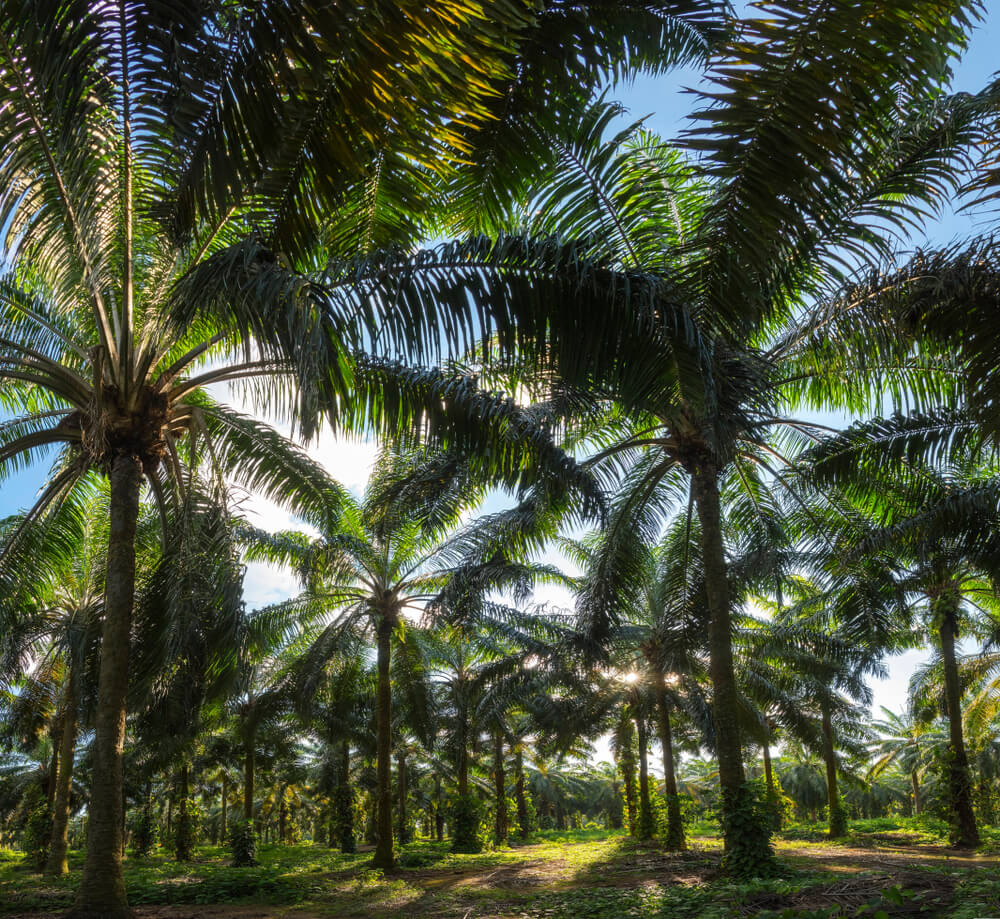
The Palm Fronds
The long fronds of the oil palm are a good place to begin. These leaves are tough, fibrous, and dependable. When fresh, they are flexible enough to shape. When dried, they become strong enough to build with. Across generations, they have been used to make rafters for light structures, roofing materials for thatching, and everyday household tools.
Palm fronds become brooms that sweep homes and courtyards. They are woven into hats that shield farmers from the sun, baskets that carry produce, mats that serve as bedding or seating, and decorative items that mark celebrations and traditions. Even when their primary use is done, they do not lose value. They become fodder for livestock or are returned to the soil as organic manure, enriching the land that will grow the next generation of palms.
The Stem And Sap
The stem of the oil palm carries another layer of usefulness. When tapped carefully, it produces palm wine, a drink woven deeply into social and cultural life. Palm wine is present at ceremonies, introductions, celebrations, and communal gatherings. It is shared, not rushed. Beyond this, parts of the stem serve in local construction, composting, and as a source of energy. The tree does not demand total destruction to be useful. It allows measured harvesting, teaching patience and balance.
The Trunk
As the palm matures, its trunk becomes thick and fibrous. While it may not be hardwood in the traditional sense, it is still valuable. It is used in construction, especially in rural settings, for walkways, bridges in wet areas, and structural support. When its productive years are over, the trunk does not become useless. It is processed for fuel, biomass energy, mulching, and soil conditioning. Even in the later stages of its life, the palm continues to contribute.
The Fruit
Then there is the fruit, the part most people recognise first. The oil palm produces heavy bunches filled with small fruits, each one rich with potential. From the fleshy pulp comes palm oil (Mmanu nri in Igbo), a staple in many African kitchens and a foundation of countless traditional dishes. It is used as cooking oil, food oil, and basic vegetable fat. It forms the base for margarine and specialist fats used in baking and food production. Its stability and versatility make it valuable both at home and at larger scale.
The story of palm oil does not end in the kitchen. The same oil becomes a raw material for fatty acids, soaps, cosmetics, industrial soaps, inks, resins, and methyl esters used in energy and manufacturing. What begins as food becomes raw material for various industries.
The Kernel
Inside each fruit is the kernel, small but powerful. Palm kernel oil has its own distinct properties and applications. It finds its way into food products, medicinal formulations, cosmetics, and pharmaceutical bases. It is also used in industrial lubricants, where stability and performance are of the essence. The kernel proves that value is often layered, sometimes hidden beneath what we think we already understand.
Palm Kernel Chaff
Even after oil extraction, what remains still matters. Palm kernel chaff, often overlooked, becomes fuel, animal feed, a component in soap and detergent production, and compost. The idea of waste struggles to survive around this tree.
These are the parts of the African oil palm that are most familiar or widely studied. However, their usefulness extends far beyond what we have mentioned here. Its potential continues to unfold wherever people find innovative ways to work with it.
This is where the metaphor circles back with clarity. To flourish like the palm tree is not to shine briefly. It is to stand for a long time. To bend without breaking. To offer value in multiple forms. To remain relevant through changing seasons, needs, and generations.
The African oil palm flourishes as a system. It feeds families, supports livelihoods, builds homes, sustains industries, and carries cultural memory. It does not exhaust itself all at once. It grows steadily, produces consistently, and endures.
In a world where speed and instant results are craved, the palm tree offers a different lesson. Growth can be slow and steady. Strength can be flexible, and usefulness does not need to be limited to a single purpose.
The African oil palm shows us that value multiplies when nothing is wasted. The tree gives without needing to be completely destroyed to be useful. It teaches restraint and balance.
Perhaps that is why the metaphor has endured. To flourish like the palm tree is to remain grounded, respond wisely to change, and continue to give long after the applause fades.
Now if you have ever cooked with palm oil, swept with a palm broom, rested under a thatched roof, shared palm wine at a gathering, or relied on products shaped by this tree, then you already understand why this tree is more than a just a plant. It is an ecosystem of survival.
The palm tree does not just flourish. It makes flourishing possible.
Stay frosty.