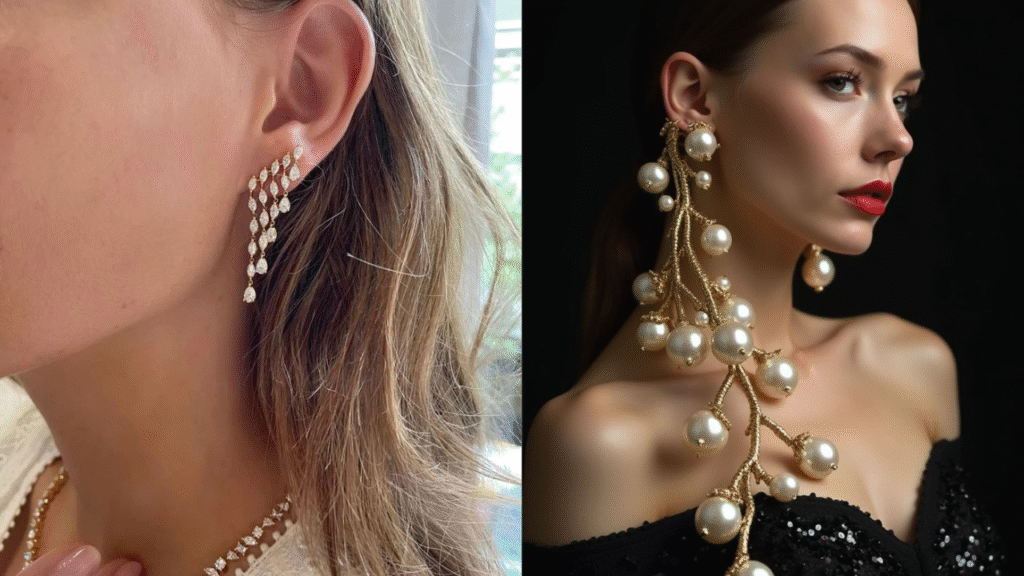
Fashion has always been about making statements, but those statements don’t always sound the same. Some scream with bold logos and daring designs, while others whisper with understated elegance. Think of the difference between the fashion at a royal event at Buckingham Palace and the fashion at the Met Gala. At the palace, the style is refined, almost restrained: elegant gowns, perfectly tailored suits, and jewellery that speaks through craftsmanship rather than size. At the Met Gala, the outfits are larger-than-life, often theatrical, designed to dazzle cameras and dominate headlines.
If loud luxury is the flashy Lamborghini revving its engine down the street, quiet luxury is the sleek black sedan gliding past with no need to prove anything. Both are powerful, but they speak in different languages. Quiet luxury fashion is not entirely new, though it has gained fresh momentum in the last few years. To understand it, we need to look at where it came from, what makes it different from its louder counterpart, and why it resonates so much in our world today.
The Origins of Quiet Luxury
Quiet luxury has its roots in older traditions of elegance and restraint. Think of aristocratic dressing in Europe centuries ago. Tailored garments made from the finest fabrics, but never screaming for attention. In fact, much of old money style was grounded in subtlety. Wealthy families would invest in clothes that lasted, made by the best craftsmen, without plastering their social status on the fabric.
Fast forward to the late 20th and early 21st centuries, fashion began to split into two opposing forces. On one side, loud luxury took over with big designer logos, statement handbags, and monogrammed everything. For many, it was a way to visibly showcase status in a consumer-driven world. On the other side, a smaller but equally powerful movement of restraint was quietly brewing. Brands like Loro Piana, Brunello Cucinelli, and The Row began cultivating a clientele that didn’t want or need the validation of logos. Their wealth spoke through quality, fit, and timelessness rather than shouting brand names.
By the time shows like ‘Succession‘ hit global screens, quiet luxury had found its moment. The Roy family didn’t dress in Gucci monograms or Balenciaga prints. They wore plain baseball caps and cashmere sweaters that only those in the know could identify. That was the point; the fewer people who recognised the label, the more exclusive it felt.
Characteristics of Quiet Luxury in Fashion
Quiet luxury is best described as understated elegance. It is the art of looking expensive without needing to tell anyone you’re expensive. Fundamentally, it values timelessness over trendiness. The clothes are beautifully cut, perfectly tailored, and often in neutral palettes: beiges, creams, blacks, and navy blues. The fabrics are where the money sits: cashmere, silk, linen, and fine wool.
Logos are either hidden or completely absent. Instead of the instantly recognisable “LV” or “GG” across your chest, quiet luxury lets the weight of craftsmanship carry the message. A blazer fits like it was made for you, trousers drape with effortless grace, and shoes are polished but simple. The beauty lies in details that are invisible to the untrained eye but magnetic to those who know.
It is also deeply personal. Quiet luxury pieces are not about impressing strangers; they are about making the wearer feel grounded and elevated. There’s a sense of calm that comes with slipping into a perfectly cut white shirt or draping a cashmere sweater over your shoulders. It’s wealth in its most self-assured form: not loud, not desperate, simply present.
Why Quiet Luxury Resonates Today
The rise of quiet luxury in this era is not accidental; it’s a reflection of the cultural shifts shaping how we think about fashion, status, and even the planet.
First, minimalism has made its mark on our lives, leading to the growing love for decluttered spaces; people have been leaning toward simplicity. That simplicity naturally spills over into fashion. Instead of closets overflowing with fast-fashion trends, many want fewer but better pieces. Quiet luxury aligns perfectly with this mindset. It’s about investing in a timeless coat you can wear for years, not ten different jackets that fall apart after a season.
Second, environmental concerns play a huge role. Fast fashion has come under fire for its wastefulness, exploitation, and environmental damage. Quiet luxury, while still high-end, at least promotes the idea of buying less and keeping pieces longer. A coat made from quality fabric may cost a fortune, but it can last decades. This isn’t just sustainable in a material sense; it also reduces the endless cycle of chasing trends.
Third, there’s a cultural shift in what wealth looks like. In the early 2000s, flaunting status was almost necessary: logos, bling, and designer-heavy outfits. But now, wealth wants to be discreet. True exclusivity means that only a few people recognise what you’re wearing. If everyone knows your brand at a glance, it’s no longer exclusive. The appeal of quiet luxury is in its insider feel; those who know, know. Those who don’t are not meant to.
Finally, today’s uncertain world has given rise to what some call “recession-core dressing”. Even among the rich, there’s an instinct to appear more grounded during times of global crises, inflation, or political unrest. Dressing down, even with expensive pieces, signals seriousness and restraint. It’s the fashion equivalent of speaking softly in a noisy room.
The Fails of Quiet Luxury
As alluring as quiet luxury sounds, it isn’t without its flaws. For one, it can be incredibly elitist. While the idea is ‘fewer but better’, the reality is that most quiet luxury pieces are outrageously priced. A plain-looking cashmere sweater might cost more than the average person’s monthly rent. This creates a paradox: a trend celebrated for its simplicity is accessible only to the very few.
Another issue is that it can come off as bland. Without logos, colours, or bold designs, quiet luxury can look plain to the untrained eye. What’s the difference between a $1,500 The Row shirt and a well-ironed white shirt from Zara? To many, not much. The subtle distinction that insiders obsess over might look like sameness to everyone else.
There’s also the problem of quiet luxury being taken over by fast fashion. High-street brands are now mass-producing “quiet luxury inspired” pieces. While this democratises the style, it also cheapens the concept, making it just another trend rather than a philosophy of dressing. Ironically, this fast-fashion version of quiet luxury contradicts the whole ethos of quality and longevity.
Yet there’s the psychological side. Sometimes quiet luxury feeds into a superiority complex. Because the style is built on insider recognition, it can create unnecessary hierarchies: those who know versus those who don’t. It can feel like an exclusive club where access is limited not by logos but by knowledge and subtle codes.
The Future of Quiet Luxury
So where does quiet luxury go from here? Will it endure or fade into the archives of fashion trends? The signs suggest that it may last longer than expected.
For one, the world is steadily moving toward conscious consumption. As climate conversations intensify, people are becoming more aware of the cost of overconsumption. Quiet luxury, with its emphasis on timeless pieces and fewer purchases, aligns with that direction.
However, it’s important to recognise that quiet luxury is not for everyone. Younger generations, especially Gen Z, are still deeply influenced by the loudness of pop culture. Music icons, movie stars, and social media influencers continue to glamorise logo-heavy brands, and that’s what many young people gravitate toward. For them, fashion is still about visibility, being seen and recognised in certain labels.
Then there’s the question of affordability. Quiet luxury is, frankly, out of reach for most people. A plain sweater from a brand like Loro Piana can cost the equivalent of someone’s yearly rent. Even people who don’t want to wear loud, flashy fashion often turn to “quiet-luxury-inspired” pieces from high-end brands or premium retailers, simply because the original thing is unattainable. This makes the conversation about quiet luxury less about generational shifts and more about access and circumstance.
That said, fashion is cyclical. Quiet luxury may be the trend today, but there will always be space for loud, flamboyant dressing. In fact, the coexistence of both extremes fuels creativity in the industry, giving people options to express themselves in different ways.
Looking ahead, the future of quiet luxury will likely be defined by balance. It may evolve into more accessible forms that allow wider participation, or it may retreat further into exclusivity. Either way, its influence on fashion cannot be denied.
In conclusion, quiet luxury is not just about fashion choices; it’s a mindset that pushes back against the noise of fast trends and loud branding, reminding us that true elegance doesn’t need to be all up in your face.
Quiet luxury, whether expressed through exclusive designer pieces or more affordable high-street versions, is about allowing your fabric, your fit, and your presence to speak subtly. By extension, it is a way of living that does not need to prove anything, because it already knows its worth.
Stay frosty.