It’s just a bill, a simple piece of paper or a total on a POS machine, yet the moment it lands on the table during a date, the air seems to change. Everyone suddenly becomes aware of their movements, their words, and their wallets. The conversation that was flowing so easily just seconds ago pauses, replaced by a quiet tension wrapped in smiles. Who should pay? Should we split? Should I offer? Should I wait? It’s amazing how one tiny question can expose so much about who we are, what we believe, and how we’ve been shaped.
For many people, splitting bills shouldn’t even be a debate. In theory, it’s simple. Two people enjoyed a meal, so they shared the cost. Fair and square. Yet in reality, especially in African societies like ours, it’s never just about fairness or math. It’s about culture, gender, pride, and sometimes, unspoken tests of affection. That’s what makes this topic such a big deal. It’s not really about the money; it’s about what the money means.
In most African settings, there’s an old, almost sacred expectation: the man should always pay. It is an idea woven into our upbringing, our stories, even our sense of masculinity. A man who doesn’t pay the bill is often seen as unserious, stingy, or unchivalrous. For generations, that standard stood firm. Paying wasn’t optional; it was part of being a man. You could see it play out everywhere: from casual dates to weddings, from family outings to office dinners. The financial gesture was always a symbol of leadership, responsibility, and strength.
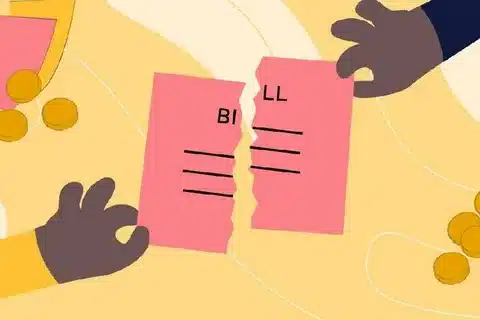
Yet, slowly, that symbol is being challenged. A new wave of thinking has begun to creep in, driven by the realities of modern relationships, rising living costs, and the growing independence of women. Many women today earn their own money, pay their own bills, and build their own lives. They’re not waiting to be taken care of; they’re building empires, chasing dreams, and making choices. So, when the bill arrives, some genuinely feel that splitting it makes sense. It’s not a rejection of romance; it’s an expression of equality.
Nonetheless, even with this shift, it’s not always an easy conversation to have. A woman offering to pay can still make some men feel uncomfortable, almost as though their role is being questioned. For some, it’s not even about the money; it’s about pride. The gesture of paying is tied to identity, ego, and how they perceive their place in the relationship. When that is challenged, it stirs something deeper than wallets.
On the flip side, a woman offering to split the bill can sometimes trigger judgement too, from friends, from society, or even from her date. There’s still that subtle narrative that says if she pays, she’s “doing too much”, “trying to prove a point”, or “removing the man’s pride”. It’s a tightrope no one asked to walk, between being considerate and being labelled, between showing independence and being seen as too forward.
That’s why splitting bills, as simple as it sounds, remains emotionally loaded. It forces people to confront their unspoken expectations about gender and power. It’s a reflection of how comfortable we are not just with money but with each other.
Money, in relationships, has always been symbolic. It’s one of the quickest ways to reveal comfort levels, independence, and even ego. You can tell a lot about a person’s mindset from how they handle financial situations. The partner who insists on paying every time might be doing it from love and generosity or from control and pride. The one who always avoids paying may be struggling financially or perhaps hiding behind entitlement. And the one who prefers to split might just want a sense of balance and mutual respect. There’s no single interpretation; the meaning lies in the intent.
Yet, intent is tricky because it’s invisible. On a date, no one says, “I’m paying to prove I’m in charge,” or “I’m offering to split because I want equality.” Instead, people read gestures, interpret actions, and draw conclusions. One person thinks, “If he doesn’t pay, he doesn’t value me.” Another thinks, “If she never offers, she’s taking me for granted.” And somewhere in between those two thoughts lies the chaos of modern dating.
Perhaps the real issue isn’t who pays but how we perceive what paying represents. In older generations, dating roles were clear. The man pursued, provided, and paid. The woman received, appreciated, and reciprocated in emotional ways. It wasn’t balanced, but it was predictable. Now, things are less predictable, and predictability, for many people, was comfort. This shift toward equality, while beautiful, also disrupts that comfort. People are still figuring out what modern respect and partnership look like when both sides bring something to the table literally and financially.
And yet, one thing hasn’t changed: everyone wants to feel valued. Whether it’s through a thoughtful gesture, a shared expense, or an unspoken understanding, people want to feel seen and appreciated. That’s why splitting the bill can sometimes feel like more than just dividing costs. It can feel like dividing sentiment. It can make one person wonder if the date was transactional or meaningful.
Interestingly, the discomfort around this topic often mirrors how we view relationships as a whole. In societies where love is still tightly linked to provision, money becomes emotional currency. Paying for someone is how affection is expressed. It’s how people say, “I’ve got you.” And when that is removed, many are left wondering: Does equality mean we have lost romance?
Of course, romance and equality don’t have to cancel each other out. The problem is not splitting the bill itself but the silence around it. We rarely talk about it honestly. Couples dance around the topic until resentment builds. Maybe if people communicated more openly, not about who’s right or wrong but about what feels respectful, this wouldn’t be such a big deal.
Take for instance long-term relationships. In those, splitting bills often becomes natural, both partners contribute according to their capacity. Yet, even in those settings, how money is handled still speaks volumes. There are couples who share everything but silently resent who earns more. There are others who split evenly but emotionally interpret it as a lack of care. And there are those who don’t split at all, yet live in quiet imbalance. So really, it’s not the act that defines harmony; it’s the understanding behind it.
In Nigeria and many other African societies, that understanding is slowly evolving. More women are choosing to show financial initiative, not as rebellion but as balance. More men are learning that allowing a woman to pay sometimes doesn’t make them less of a man. It’s a gradual shift, not a revolution, yet it’s noticeable. And like all cultural shifts, it will take time.
Nevertheless, until that balance becomes normalised, splitting bills will continue to carry emotional weight. It’s not a test of love, but of how well people understand each other’s values. When you strip it down, it’s really about two people trying to navigate the space between tradition and modernity, between ego and equality.
At its core, paying or splitting the bill isn’t a financial decision; it’s a communication one. It tells you how someone sees partnership, either as a performance, a duty, or a collaboration. It shows whether a person’s sense of self-worth depends on dominance or on connection. It exposes comfort levels: who’s secure enough to accept, who’s humble enough to offer, and who’s confident enough to share.
So maybe the question shouldn’t be “Who should pay?” but rather, “What does paying mean to you?” Until we can answer that honestly, we’ll keep treating the bill like a battlefield instead of a bridge.
In the end, the goal isn’t to win the debate; it’s to build understanding. Regardless of if you prefer to split the bill, take turns, or have one person pay doesn’t matter as much as the values behind it. What truly matters is that both people feel respected and comfortable. When that happens, the energy shifts. The moment the bill comes, it’s no longer a test; it’s just another shared moment between two people figuring out life together.
The truth is, splitting bills is not just about money; it’s about the invisible power dynamics that shape how we love, how we show care, and how we perceive worth. The bill only exposes what’s already there: our beliefs, our insecurities, and our need to belong and be valued. Once we understand that, we might finally stop arguing about who should pay and start asking how to build relationships where paying or not paying doesn’t define the connection.
Until then, every time a waiter drops that little piece of paper on a table between two people, it will keep doing what it’s always done, forcing us to confront what we think love, respect, and equality truly mean.
Stay frosty.