Affirmations are simple, intentional statements that shape the way we think and, in many ways, how we live. They’re not mystical chants or internet mantras; they’re gentle reminders of who we’re becoming. When used right, affirmations have a quiet power, the ability to reorganise our thoughts, redirect our focus, and remind us that we’re allowed to evolve.
By their nature, affirmations are built on one principle: what we say repeatedly, we start to believe. And what we believe, we start to embody. The mind listens, even when we think it doesn’t. That’s where the real power lies.
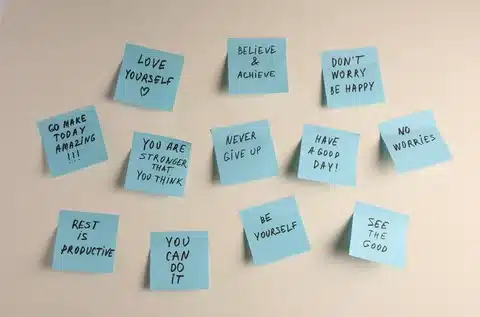
Still, affirmations can feel unrealistic at first. You might tell yourself, “I’m confident”, while a voice in your head insists otherwise. You whisper, “I am enough”, but your mind flashes every moment that makes you doubt it. That resistance is where most people stop. But affirmations are not about pretending. They’re about gradually introducing new truths that feel possible, not perfect, not exaggerated but believable enough to hold on to.
Affirmations are not about denying reality; they’re about redirecting focus within it. Every thought we repeat carries emotional weight, and over time, those repeated thoughts create familiar pathways in the brain. The more we walk a certain route, the easier it becomes. Affirmations help us choose which mental paths to keep walking.
When someone says, ‘I’m learning to trust myself’, that repetition begins to form a path toward self-trust. It’s not instant, and it’s not magic. It’s gradual, like roots forming beneath the soil long before a tree appears. The words themselves don’t hold power until they’re backed by belief and consistency.
If you have ever had one negative comment linger longer than ten compliments, you already understand how affirmations work. The brain tends to cling to what’s familiar, whether that’s a harsh thought or a kind one. So if you’ve spent years replaying old failures or labelling yourself with limiting words, your mind has simply grown used to that version of you. Affirmations challenge that familiarity. They give your mind something new to hold on to.
That’s why someone who constantly says, “I always mess things up”, eventually stops trying. That statement becomes part of their identity. Meanwhile, someone who starts saying, “I’m learning to handle challenges better”, begins to create a new narrative. It’s not denial; it’s direction.
Affirmations don’t work for everyone because many people start from disbelief. They choose phrases that sound good but feel too far removed from their current experience. Saying “I’m successful and thriving” when you’re just trying to make ends meet can feel fake. The mind rejects what it can’t recognise. A better way to begin is to frame your affirmations as movement, not perfection: “I’m learning to attract opportunities that align with me.” That sounds possible. It makes room for growth. The best affirmations are bridges between where you are and where you’re going, not blind leaps into fantasy.
Another reason affirmations fail is inconsistency. You can’t repeat something once in a while and expect your mindset to change. They require a little bit of patience and a lot of repetition. You plant them through daily reminders, spoken, written, or even thought, until they stop feeling like something you’re trying to believe and start feeling like something you already know.
That’s the shift affirmations create: they make belief familiar again.
If you’re new to the practice, start with affirmations that sound like something your future self might whisper to your present one.
Things like:
I’m learning to give myself more grace.
I’m capable of growing through what I’m facing.
I trust myself to handle challenges better each day.
I’m open to receiving good things.
I am worthy of peace and clarity.
These are not empty words. They’re declarations of self-compassion. They meet you where you are, without demanding that you already be healed or confident.
The form doesn’t matter. Say them aloud, write them down, or repeat them silently when your mind starts spiralling. The point is to make them part of your language. Over time, affirmations become less like a task and more like a tone – the tone in which you speak to yourself – and that tone matters because affirmations are really about self-talk, the ongoing, private conversation you have with yourself every day. For many of us, that conversation isn’t always kind. We replay our mistakes louder than our progress. We minimise our achievements and internalise criticism until it becomes a second voice.
Affirmations are a deliberate rewrite. They don’t silence the old voice overnight, but they start introducing new lines and new tones. They remind you to speak to yourself with the same patience you give to others. When you say, “I am doing my best,” you’re not being naive. You’re being deliberate. You’re choosing to stop waging war with yourself.
At some point, without noticing, that new voice starts to feel natural. The once awkward phrases begin to sound true, not because life suddenly got easier, but because you stopped treating yourself like a problem to fix.
You don’t need an elaborate morning ritual to practise affirmations. They don’t require candles, crystals, or a perfect meditation setup. You just need awareness: small moments where you pause, breathe, and choose different words. It could be the sentence you repeat before a difficult meeting or the one you remind yourself of when you’re tempted to give up. It could be something you jot on a sticky note or set as a reminder on your phone.
The point is not about the performance; it’s about presence. When affirmations start to show up naturally in your thoughts, in your tone, and in how you handle challenges, that’s when you know they’re working. They won’t erase fear or self-doubt, but they’ll help you approach them differently. They won’t fix everything, but they’ll teach your mind to support you instead of sabotage you.
The beauty of affirmations is in how subtle their effect is. You don’t wake up one morning transformed; you just start noticing small shifts. You recover from disappointment faster. You don’t talk yourself out of opportunities as easily. You start giving yourself credit where you used to give yourself blame. That’s the real transformation; the one that happens quietly but lasts longer than any motivational burst.
With time, affirmations start influencing action. They remind you that you’re allowed to want more, that you can begin again, and that you don’t have to wait for perfect conditions to believe in yourself. They plant small seeds of courage that eventually turn into decisions: to apply for that job, to take that course, to set that boundary. The shift happens first in the mind, and then it ripples out into everything else.
If you’ve spent years being your own harshest critic, affirmations might feel strange at first. Speaking kindly to yourself can almost feel undeserved. But harshness has never helped you grow; it only kept you stuck. Affirmations invite you to treat yourself with the compassion you should have received a long time ago. They replace the internal scolding with gentleness, reminding you that grace is also a discipline.
No one blossoms under judgement. We grow where we feel safe, and affirmations help you create that safety from within. They soften the edges of self-criticism and remind you that you’re still learning, still trying, still worthy.
At their essence, affirmations are not about saying things you wish were true. They’re about remembering what already is. The courage that has carried you through hard seasons. The resilience you’ve built without realising.
When you start affirming who you are and who you’re becoming, you begin to see yourself differently, not as someone constantly falling short, but as someone in progress. You start showing up with confidence, not because everything is perfect, but because you finally believe you’re allowed to take up space in your own story.
Over time, you begin to notice a mind that feels lighter, a self-perception that feels kinder. That’s what affirmations do. They help you build a relationship with yourself that’s rooted in understanding rather than judgement.
You don’t need to be overly positive or spiritual to use them. You just need to care enough about your growth to change the way you talk to yourself. Because every time you affirm your worth, your direction, or your progress, you’re not just saying words. You’re rewriting your story, one sentence, one belief, one moment at a time.
Stay frosty.





SELF-AFFIRMATION!This reminded me of my own journey with affirmations. At first, I honestly struggled. Maybe because I didn’t see results immediately but as time went on and I began to notice real changes in my mindset, my academics, and even my work life, I became more intentional. Affirmations have helped shape me into a more confident, grounded, and focused person.
This is powerful, relatable, and full of truth. Nne, please don’t stop writing. Your words are reaching people, inspiring us, and giving us strength. The sky is only your starting point. Your writing will take you to places you never imagined, and I’m truly proud of you.
Keep going. You have a gift, nurture it!
What can I say, Sis? Thank you and God bless you! 💖