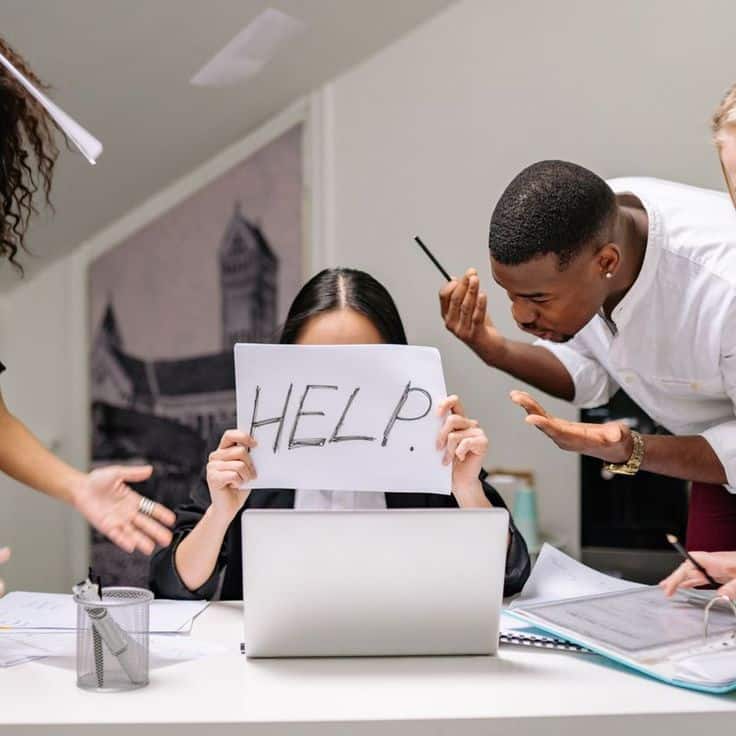
Lately, conversations with friends always seem to circle back to the price of things. We used to talk about dreams, travel, or that new film everyone was obsessed with. Now, we talk about the price of eggs, the sudden jump in fuel costs, and which supermarket has the best deals on bulk items. It is exhausting. That is what economic anxiety looks like in everyday life.
This constant mental load acts like a background hum that never stops, draining our energy and making every decision feel like a high-stakes gamble. We are not just choosing what to eat or where to go; we are measuring every choice against a safety net that feels thinner by the day. Economic anxiety has slowly moved into the driver’s seat of our lives, steering us away from the things that once brought us joy, spontaneity, and a sense of ease.
Take our social lives, for instance. Have you noticed how the group chat goes a bit still when someone suggests a night out? We have all become experts at the polite decline. We say we are tired, or that we have too much work, but the truth is often much simpler: we just can’t justify the expenses.
In Africa, the culture of showing up for people has always been our social glue. We go to the weddings, the burials, and the housewarmings. But now, the cost of transport alone is enough to make a person stay indoors. We are becoming a society of homebodies by force, not by choice.
This isn’t just about missing a party; it is about the erosion of our communities. When we stop gathering because we can’t afford the entry fee of socialising, we lose the very support systems that are supposed to help us through hard times. It’s a lonely cycle, and it is happening everywhere.
Then there is the matter of the heart. Love is supposed to be blind, but these days, it seems to have a very sharp eye for a bank statement. Economic hardship is radically reshaping how we approach relationships and marriage. For a lot of young people, the idea of a traditional wedding has become a distant, almost comical fantasy.
In Nigeria, where a wedding is often a massive communal event, the pressure is immense. But when the price of a bag of rice has tripled, how do you justify a party for five hundred people? We are seeing a rise in what people call secret weddings or simple registry ceremonies.
While some might call this a sensible shift, for many, it feels like a loss of a dream. Beyond the wedding, people are delaying starting families because they are terrified of the costs. When you are not sure if you can afford your own rent in six months, bringing a child into the world feels less like a blessing and more like a financial risk. It is a sobering thought that our global economy is effectively acting as a form of birth control.
Career choices are also being hit hard. We were told to follow our passion and find our purpose, but that advice feels almost insulting when you’re staring at an empty cupboard. Economic anxiety is forcing a lot of brilliant people into survival jobs. We are seeing artists becoming data analysts and teachers moving into sales, not because they love the work, but because they need the stability. This is even more pronounced with the Japa wave.
People are not just leaving for the sake of adventure; they are leaving because they feel they have no choice if they want a predictable future. It is a brain drain fuelled by fear. Even those who stay are forced into a multi-hustle lifestyle. Everyone has a side business, a gig, or a hustle on the go.
While we praise this as hustle culture, we should probably call it what it really is: a desperate attempt to stay ahead of inflation. There is very little room for creativity or rest when every waking hour is dedicated to making ends meet.
The psychology of this is fascinating, if a bit grim. When we live in a state of constant financial fear, our brains move into a scarcity mindset. We become more short-term in our thinking. We stop planning for five years from now because we are too busy worrying about five days from now. This makes us more risk averse.
We don’t take the chance on a new business idea, we don’t move to a new city for a better opportunity, and we don’t invest in ourselves. We just hold on to what we have with a grip that is almost painful. This lack of agency is one of the most damaging parts of economic anxiety. It makes us feel like we are just passengers in our own lives, watching the world get more expensive while we stay in the same place.
Even the way we view education has changed. It used to be the golden ticket, the one thing that guaranteed a better life. Now, families are looking at the cost of university and wondering if it is worth the gamble. In the UK, students are graduating with debts that will follow them for decades.
Right here in Nigeria, the rising cost of tuition at both private and public schools is forcing parents to make heartbreaking decisions about which child gets to finish their degree.
Education is becoming a luxury item again, and that should worry all of us. When we start viewing learning as a financial transaction rather than a way to grow, we lose something vital as a society.
There is also a subtle, almost invisible shift in our mental health. This kind of stress doesn’t always show up as a breakdown. Often, it shows up as a constant irritability, a lack of sleep, or a feeling of being permanently on edge. We are all a bit more snappy with our partners, a bit less patient with our children, and a bit more cynical about the future. The tragedy is that we often blame ourselves.
We think if we just worked a bit harder or were a bit smarter with our money, things would be fine. But the truth is that these are systemic issues. You can’t “life hack” your way out of a national currency collapse or a global inflation crisis. Realising this is actually quite important. It takes the weight off the individual and puts it where it belongs: on the leaders and systems that are failing us.
Despite all this, there is something to be said for the way we are adapting. There is a new kind of honesty emerging. We are being more open about our struggles. The stigma of “not having” is slowly being replaced by a shared understanding that we are all in the same boat. We are finding joy in smaller, cheaper things.
A walk in the park, a long conversation with a friend, or a homemade meal is starting to hold more value than it did before. We are being forced to redefine what a good life actually looks like. If it isn’t about the car we drive or the labels we wear, what is it about? Maybe it is about the strength of our connections and the resilience of our spirit.
It is easy to feel hopeless when you look at the charts and the news reports. But human beings are remarkably good at finding a way through the dark. We are changing our choices, yes, but we are also learning what we can live without and what we absolutely must hold onto. The economy might be in shambles, but our ability to care for one another and to find meaning in the middle of the mess is still very much intact.
We need to stop pretending that everything is fine and start talking honestly about the toll this is taking. Because when we realise that Tunde, sitting on his bed in Lagos, is feeling the same thing as a young woman in Manchester or a father in Accra, we start to see that we are not as alone as we thought. Sometimes, there is hope in simply knowing that.
Stay frosty.