Do you know there is a kind of attachment that sneaks up on people in a way they never expect? It begins with warmth, attention, connection, and that intoxicating feeling of finally being understood. Before long, the same relationship that once felt safe starts pulling you into moments that leave you confused or hurt, yet unable to detach. That emotional tug of war, that strange blend of pain and devotion, is what many people don’t realise is trauma bonding.
The phrase may sound heavy, maybe even clinical, yet the experience itself is surprisingly common and deeply human. It is the kind of bond that feels like love when it is really a cycle that feeds on adrenaline, hope, fear, longing, and the need to feel valued by someone who rarely offers stability.
Trauma bonds rarely begin with chaos. They often start with intensity and affection that feels intentional; someone who seems to see a version of you that no one else does. At first, the connection is the high point of your day. Then slowly, things shift. The warmth becomes inconsistent, the communication becomes unpredictable, and the emotional climate begins to swing. Instead of constant affection, you get pockets of closeness followed by withdrawals that you cannot explain. These highs and lows knit themselves into your nervous system until the person becomes the source of your comfort and your distress. Once that happens, leaving becomes far more complicated than simply walking away from someone who hurt you.
Trauma bonding thrives on this emotional confusion. The moments of hurt are often followed by apologies that feel sincere and comforting, the kind that make you believe the worst is over. There is a strange psychological trick that takes place here, one that rarely gets talked about. When someone who wounded you apologises with vulnerability or softness, it creates a feeling of power. Suddenly, the balance shifts. You feel important again. You feel seen. You feel like you matter because this person, who usually holds the emotional upper hand, is now acknowledging your pain. That apology acts like a reward, pulling you deeper into believing that things are improving, even when nothing substantial has changed.
Another element that tightens trauma bonds is the belief in who the person could be rather than who they consistently show themselves to be. Hope becomes its own kind of trap. You see glimpses of tenderness, moments where they behave like the partner you wish they were, and those tiny windows of possibility convince you that the future can look different.
People don’t stay in trauma bonds because they enjoy suffering; they stay because they remember the parts that felt right. They stay because they believe they can help bring out the version of this person who once made them feel cherished. They hold on to potential, not reality. The human heart is wired to give chances, to root for transformation, to believe that love can inspire change. The trouble is, ‘potential’ becomes a way of excusing patterns that revisit themselves over and over.
The emotional cycle becomes even more complicated when self-blame enters the picture. You begin to wonder whether you’re expecting too much, whether you’re overreacting, or whether your insecurities are the problem. It becomes difficult to differentiate your intuition from the confusion created by inconsistency. The person may occasionally treat you with tenderness again, and that makes you question everything.
The painful moments start feeling like unfortunate incidents rather than recognisable patterns. Before long, you find yourself negotiating your own boundaries just to keep the peace. You shrink parts of yourself to fit the connection. You silence your needs because bringing them up leads to conflict. You slowly become someone who tolerates more discomfort than you ever thought you would.
Relationships shaped by trauma bonding often lead people into versions of themselves that feel unfamiliar. Decision-making becomes cloudy. Self-worth becomes shaky. Emotional exhaustion becomes a normal state. You may start to feel like you’re holding the relationship together singlehandedly. You may even mistake this emotional labour for loyalty. It is hard to admit when a relationship you deeply want to work is harming you. It’s harder when you’re emotionally invested to the point where letting go feels like losing a piece of yourself. Trauma bonding creates this illusion that pain is proof of depth, that struggle is a sign of commitment, and that surviving emotional storms is a badge of honour. Yet real love doesn’t need chaos to feel meaningful.
There is a phase in trauma bonding people rarely discuss. The point where you know the relationship is draining you, yet the thought of leaving triggers panic, grief or longing. You’re not just walking away from a person; you’re walking away from the version of them you have held onto in your mind. This is where confusion peaks. Even when you manage to disconnect physically, there is a lingering attachment that refuses to disappear quickly.
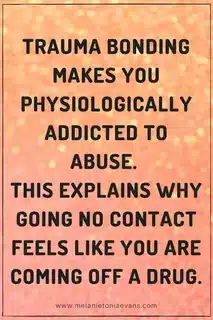
That emotional pullback, that desire to check on them, that urge to respond when they reach out, is not weakness. It is the residue of a bond formed through emotional highs and lows. Your body has become accustomed to the roller coaster, so calm feels foreign at first. Peace feels empty. Predictability seems strange. That moment of withdrawal makes many people return, even when they know the relationship has run its course.
Breaking a Trauma Bond: The Emotional, Practical, Realistic Road Out
Healing from a trauma bond requires gentleness with yourself. There is no instant switch that resets emotional patterns. Clarity comes gradually. You begin by acknowledging the reality of the dynamic rather than the potential that kept you holding on. You start observing your feelings without judgement, noticing the moments when you crave the person, asking yourself what exactly you’re longing for. Often, you will realise that you’re not yearning for the harm; you’re yearning for the tenderness, the connection, and the moments where you felt chosen. Those moments were real, yet they were not the full picture. Healing comes from accepting both sides of the experience without romanticising one or demonising the other.
Creating distance is another step. Emotional distance sometimes has to come before physical distance. You may find yourself responding less, sharing less, and expecting less. It’s not about punishing them; it’s about slowly reclaiming space within yourself. When you reduce emotional reliance, you begin to see the relationship with clearer eyes. That clarity helps you make decisions from a grounded place rather than from attachment or fear.
Rebuilding your identity is one of the most essential parts of breaking a trauma bond. You start remembering who you were before the relationship shape-shifted your sense of self. You begin reconnecting with the parts of you that felt dimmed. You take small steps that remind you of your strength, your capability, and your voice. This rebuilding process doesn’t need to be dramatic. Small, consistent acts of self-affirmation gradually restore your confidence. Emotional independence strengthens with time, not pressure.
There is also a vital moment where you begin defining love differently from what you have experienced. Healthy love feels calm. It does not unsettle your nervous system. It does not keep you guessing. It does not require emotional acrobatics. At first, this calm can feel almost dull, simply because your system has been accustomed to emotional spikes. With time, you learn that steadiness is not lack of passion; it is emotional safety. You learn that connection shouldn’t rely on crisis. You learn that apologies should not be the glue holding a relationship together. You learn that love is not meant to feel like survival.
Eventually, the bond weakens. The distance grows. The clarity settles in. You stop longing for the version of the person you created in your mind. You start understanding that loving someone deeply does not require losing yourself in the process. You breathe easier. You see the relationship for what it was, not what it could have been. Healing doesn’t mean forgetting the good moments or denying the bad ones. Healing means integrating the experience without letting it define your future.
Trauma bonding is not a sign of weakness or foolishness. It is a sign of humanity. People stay because they hope, they stay because they care, and they stay because they believe in connection. What truly matters is recognising when a bond has become more wounding than nourishing. Growth begins the moment you choose yourself, even when your heart still feels tied to someone who wasn’t good for your peace.
If you find yourself in this cycle, start with the smallest step. Acknowledge the truth of what you feel. Hold compassion for the version of you that tried to make it work. Remind yourself that wanting love is never the solution, but choosing love that doesn’t break you is. Healing may take time, yet every moment of clarity brings you closer to the version of yourself who knows what healthy, steady, grounded love should feel like.
Stay frosty.